For organisations

Fatigue awareness for operational teams

ShiftAware helps organisations support a more fatigue-aware workforce through individual awareness, better fatigue conversations, and more informed operational decision-making.

Each staff member uses their own tracker to better understand how sleep, caffeine, alcohol, and shift demands may be influencing their fatigue state. The result is a workforce that is more aware, more prepared, and better equipped to manage fatigue risk.

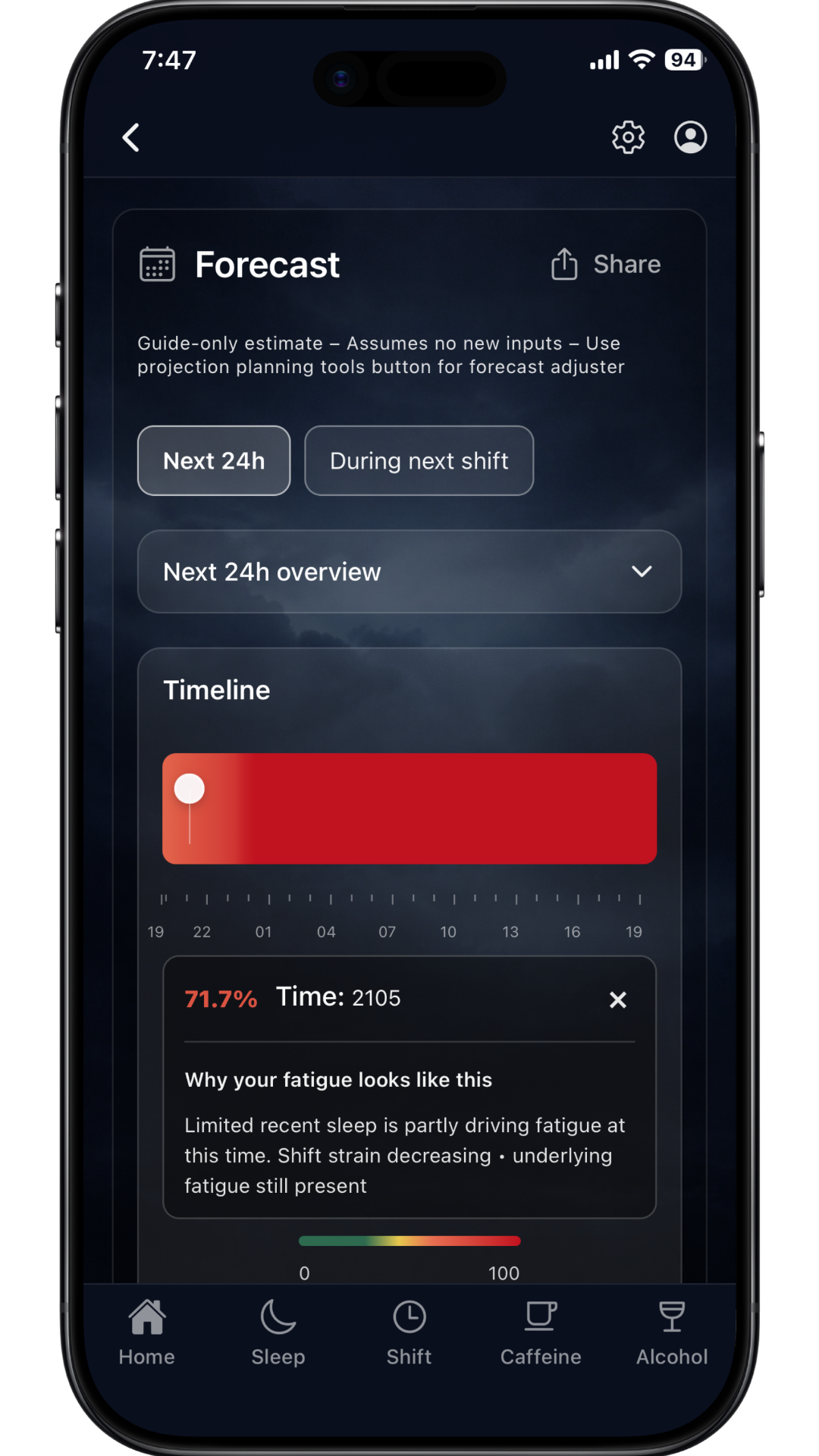
Fatigue forecast preview
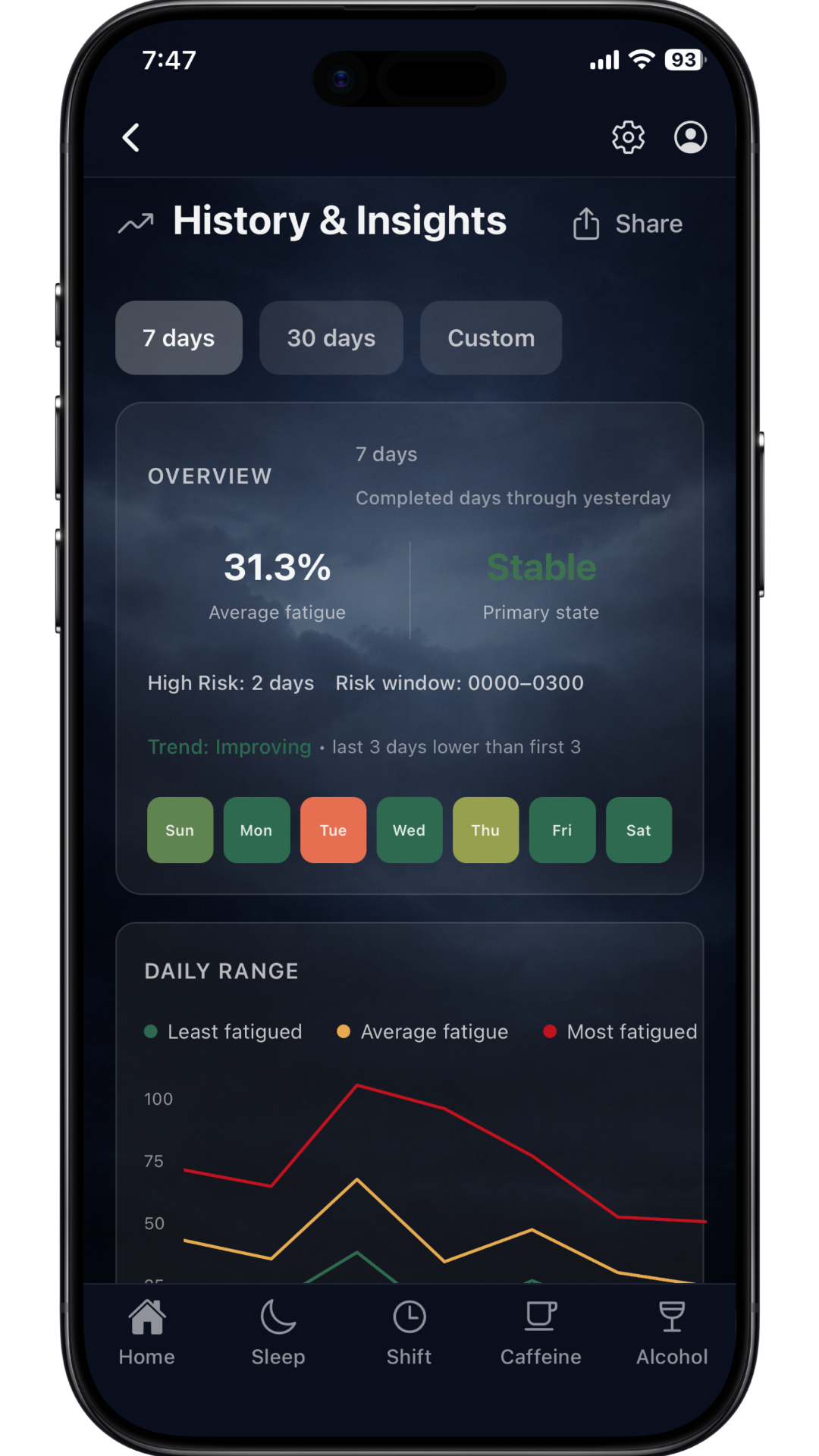
Fatigue history preview
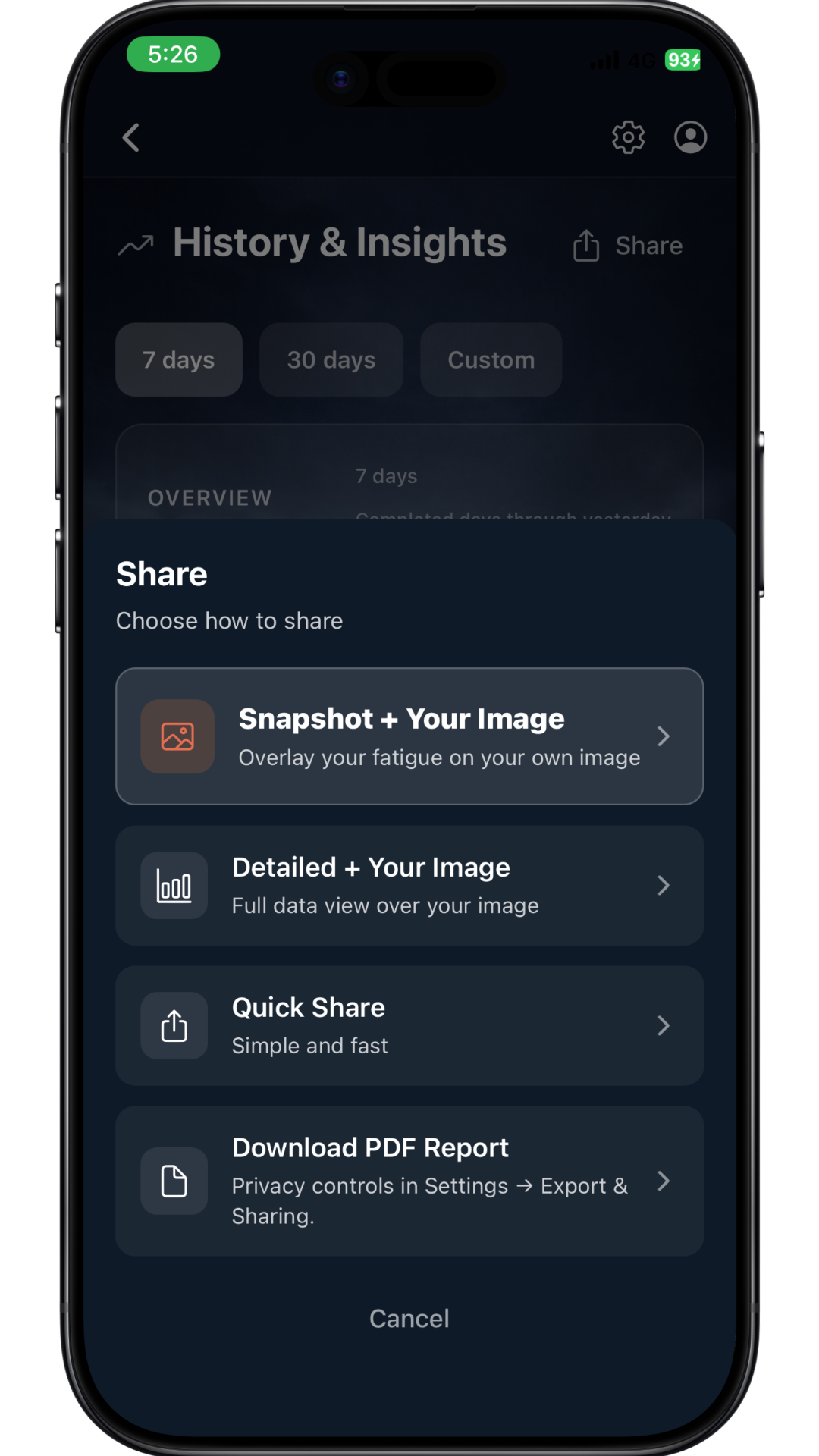
Share insights preview

Fatigue is not always obvious

In shift-based and operational environments, fatigue is dynamic. It changes across the day, across shifts, and across a roster cycle.

Two workers can appear the same on the surface while operating at very different levels of fatigue risk.

That gap between appearance, perceived readiness, and actual underlying fatigue is where slower decisions, reduced vigilance, poorer recovery, and increased operational risk can emerge.

Most workplaces already recognise fatigue as a risk, but many still rely on broad assumptions, hours worked, or self-assessment alone. ShiftAware adds a practical awareness layer to help individuals better understand where they are actually at.

Individual awareness. Workplace benefit.

ShiftAware is designed for individual use, not as a centralised team monitoring platform.

Each staff member tracks their own key fatigue inputs, including:

  • Sleep

    Sleep windows and recovery between shifts.

  • Caffeine

    Intake and timing relative to fatigue.

  • Alcohol

    Context for recovery and next-day readiness.

  • Shift intensity

    Workload and demanding shift patterns.

This creates better personal awareness of fatigue patterns and recovery needs.

At the organisational level, that awareness can support

  • more informed pre-shift conversations
  • stronger self-reporting
  • better reflection on readiness
  • improved recovery planning between shifts
  • a healthier fatigue culture over time
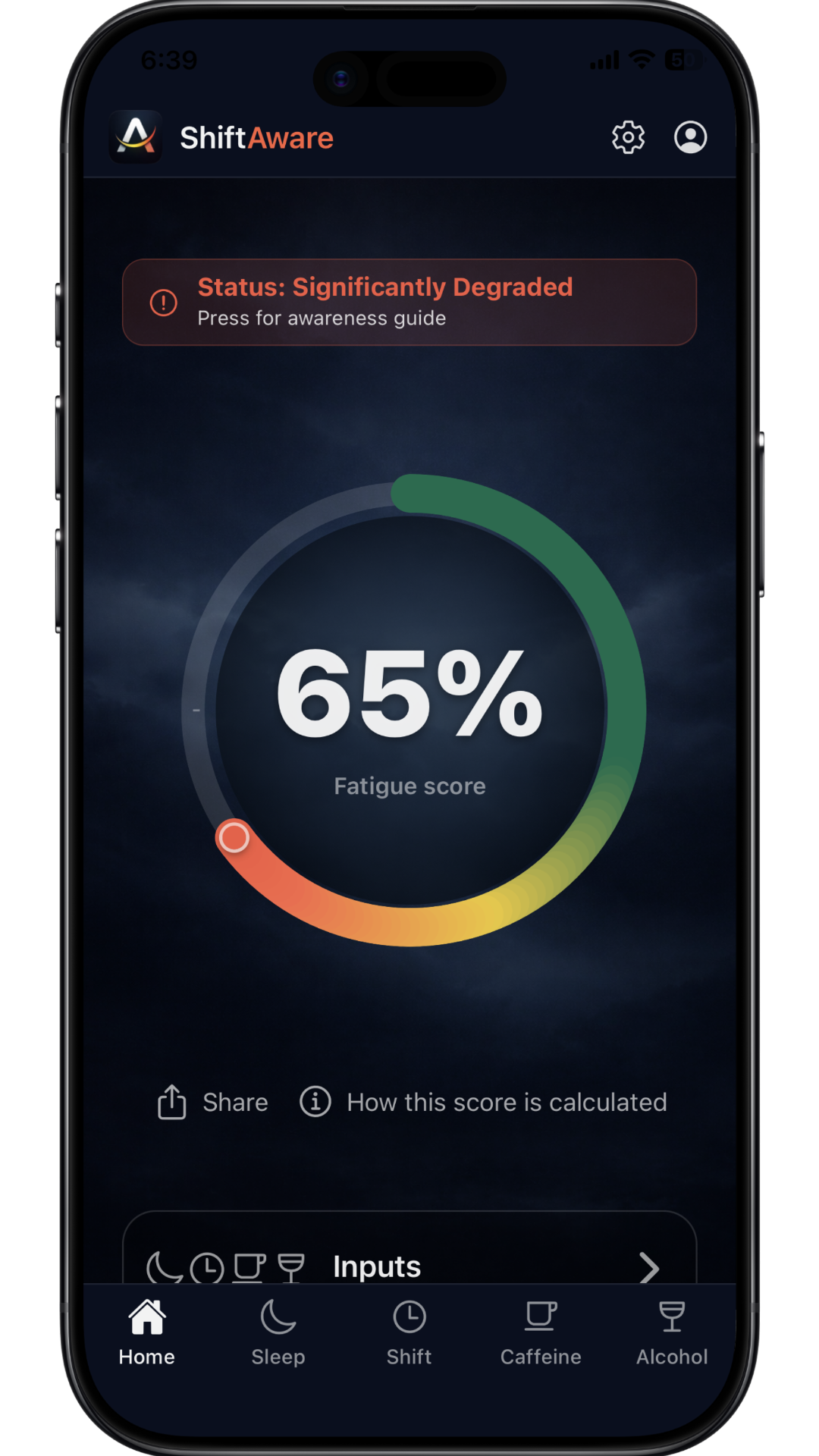
ShiftAware main fatigue view

Where organisations can benefit

ShiftAware is not a replacement for existing safety systems or fatigue policies. It is a practical awareness tool that can strengthen them by helping workers better understand their own fatigue state and recovery patterns.

Pre-shift briefs and operational meetings

When staff arrive with a clearer understanding of their own fatigue state, pre-shift discussions can become more informed. This can support better awareness around readiness, workload, pairing decisions, and operational planning.

High-risk task preparation

Before complex, safety-critical, or mentally demanding work, fatigue awareness can become part of the conversation. Staff can reflect more honestly on their current state, and leaders can consider fatigue as one factor in task allocation and risk mitigation.

Recovery between shifts

ShiftAware helps individuals understand how their behaviours and schedules affect recovery. Over time, this can support better rest planning, more intentional recovery habits, and a stronger appreciation for the role recovery plays in safe performance.

Safety culture and fatigue literacy

Providing staff with access to a dedicated fatigue awareness tool can reinforce the message that fatigue matters. It helps normalise better conversations around readiness, rest, and recovery, while encouraging a more proactive safety culture.

Why this matters for workplaces

When people better understand their own fatigue patterns, organisations benefit from better awareness at the team level — not through surveillance, but through stronger personal insight and more informed safety conversations.

  • Supports safer day-to-day decision-making
  • Encourages better awareness of readiness before work begins
  • Reinforces the importance of rest and recovery
  • Helps normalise fatigue as a real operational factor
  • Complements existing fatigue management frameworks
  • Promotes a more proactive safety culture
  • Supports industries operating across nights, rotating rosters, and extended hours
  • Builds workforce habits around self-awareness and responsible fatigue management

Not a monitoring platform

ShiftAware is not designed for live surveillance, compliance tracking, or manager-side monitoring of staff fatigue.

Each individual uses their own account and maintains ownership of their own data.

The value to organisations comes from supporting a workforce that is more aware of fatigue, more equipped to reflect on readiness, and more likely to engage in better conversations around risk, recovery, and performance.

Organisational access at a discounted rate

ShiftAware can be offered to organisations at a discounted rate for staff access.

This is still an individual-use model:

  • each staff member uses their own tracker
  • each staff member builds their own awareness
  • each staff member uses the app to better understand their own fatigue and recovery patterns

This structure supports personal engagement and meaningful behaviour change, while giving organisations a practical way to support fatigue awareness across their workforce.

Built for real-world shift environments

ShiftAware is relevant to organisations operating in environments where fatigue can meaningfully affect safety, performance, decision-making, and recovery.

Examples may include

healthcare and emergency servicesmining and resourcestransport and logisticsaviation and railutilities and essential servicessecurity and other 24/7 operations

The system is designed to reflect how fatigue actually develops across rotating rosters, night shifts, extended hours, and disrupted recovery opportunities.

Explore organisational access

We are currently inviting expressions of interest from organisations that want to support fatigue awareness across their workforce.

If you would like to explore organisational access for your staff, register your interest and we can start the conversation.